
Aquaculture Inputs for Fish and Shrimp Farming
Pond-side inputs for the part of aquaculture a farmer can actually manage — the condition of the water and the bottom soil the stock lives in.
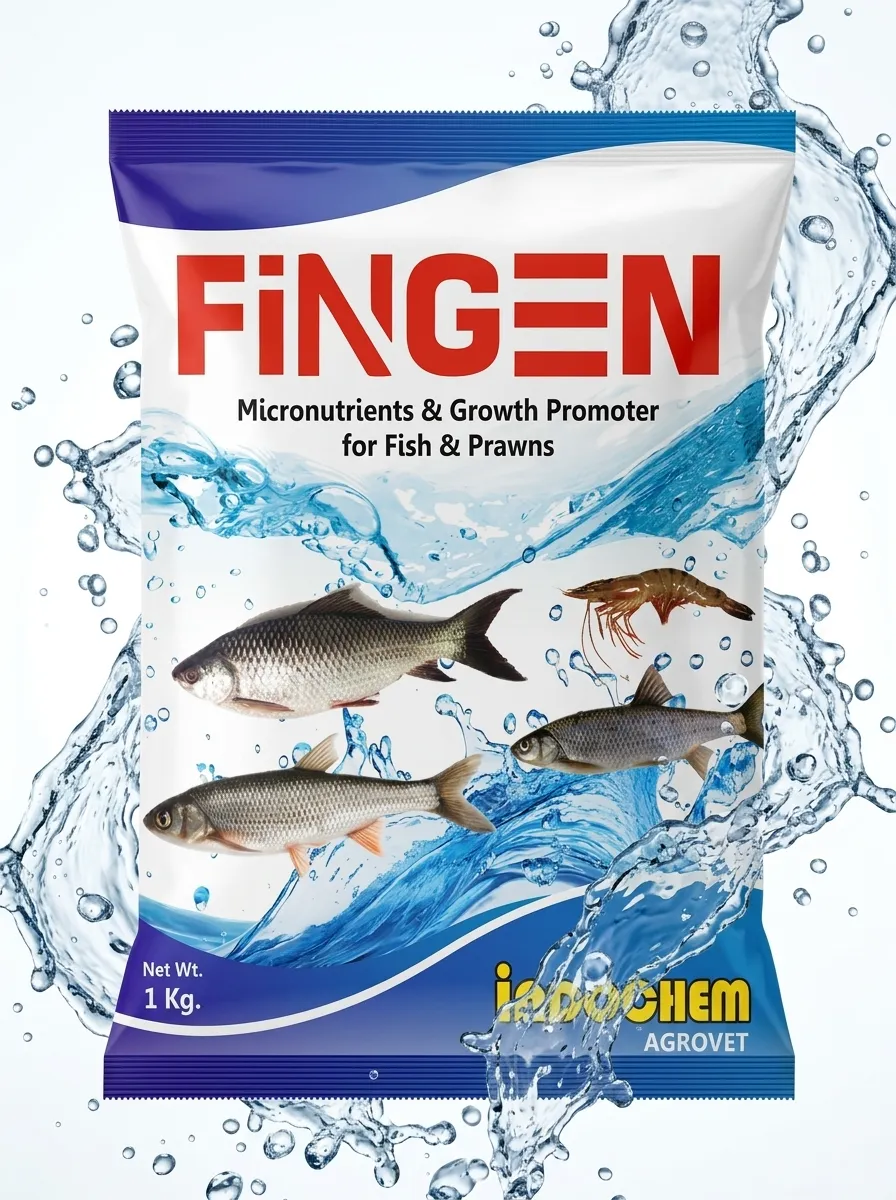
Fingen
View Details
AMM FREE
AMM FREE: Adsorbent for Aquaculture Pond Bottom Management Crops It Is Best Suitable For: Shrimp and Fish culture Use /…
View DetailsAqua Oxylime
Aqua Oxylime: Pond Bottom Conditioning & Water Quality Enhancer Crops It Is Best Suitable For: Shrimp and Fish culture Use…
View DetailsAqua Zyme Gold
Aqua Zyme Gold: Seaweed-Based Soil Enrichment for Aquaculture Crops It Is Best Suitable For: Shrimp and Fish culture Use /…
View DetailsIn a pond, the water is the field
Aquaculture differs from crop farming in one way that governs everything else: the stock lives inside its growing medium. Dissolved oxygen, pH, alkalinity, hardness, ammonia and the condition of the bottom soil are not background conditions — they are the environment the fish or shrimp breathes, feeds and grows in, and they change through the day and across the season as feed goes in and organic matter accumulates on the pond floor.
That is why an aquaculture programme is built around pond management rather than around a single input. Preparation and liming before stocking, then monitoring and correction through the cycle, decide how much of the feed bill converts into growth. A pond whose water quality has been allowed to drift will not be rescued by anything added at harvest time.
Where these products fit
The inputs in this category are used pond-side across the cycle — at preparation, and then as conditions call for them during grow-out. They complement, rather than replace, the fundamentals: correct stocking density, sound feed management and regular water testing. No supplement compensates for an overstocked pond or a bottom that has never been dried and treated between cycles.
Indochem Agrovet manufactures its range in India and supplies it through a dealer network across twenty states. Dose, timing and suitability depend on your species, stocking density, water source and the stage of the crop — our field team will advise for your pond rather than publish one figure that fits none of them.
Frequently asked questions
What are aquaculture products used for?
They are used to manage the pond environment the stock lives in — the condition of the water and of the bottom soil — across pond preparation and grow-out. In aquaculture the growing medium is the water itself, so its condition is a direct input to growth rather than a background factor.
Why does water quality matter so much in fish and shrimp ponds?
Dissolved oxygen, pH, alkalinity, hardness and ammonia are what the stock breathes and lives in, and they shift through the day and across the season as feed is added and organic matter builds up on the pond bottom. Poor water quality shows up as slow growth and poor feed conversion long before it shows up as visible loss.
When should aquaculture inputs be applied?
Pond preparation before stocking is the first and most important window; after that, application is guided by regular water testing through the grow-out cycle rather than by a calendar. The right stage depends on the product and the species.
Which product should I use for my pond?
It depends on your species, stocking density, water source, soil type and the stage of the crop. Contact Indochem Agrovet with those details and our field team will recommend from the range.