
Organic Farming in India: A Complete Guide
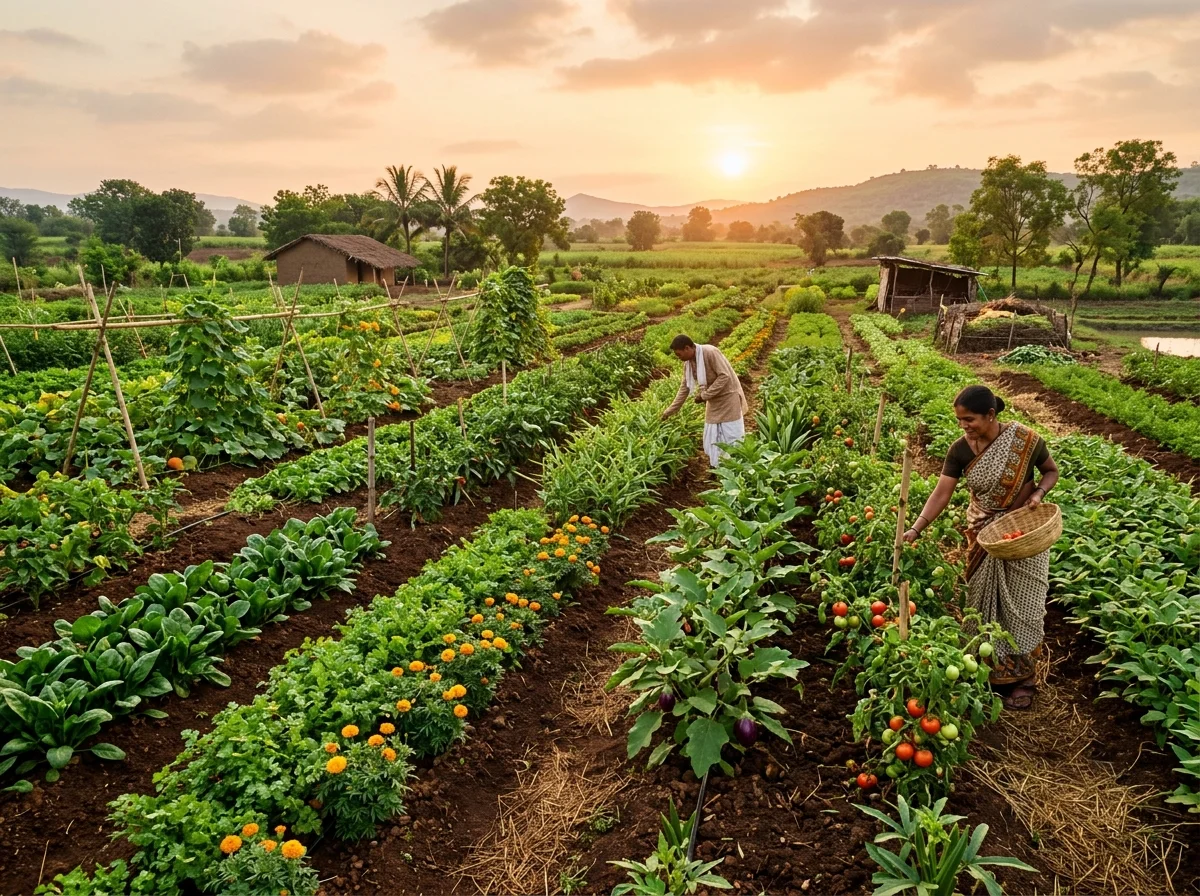
Introduction
Organic Farming in India is becoming an important approach to sustainable agricultural production, with farmers increasingly focusing on soil health, natural nutrient management, and responsible crop protection. Instead of depending primarily on synthetic agricultural inputs, organic farming works around practices that support soil organisms, plant health, biodiversity, and long-term productivity. India's diverse agro-climatic conditions also provide opportunities for producing a wide range of organic crops and agricultural products.
From cereals and pulses to vegetables, fruits, spices, tea, coffee, oilseeds, and sugarcane, organic production can be applied across many crop categories. Farmers can use practices such as composting, organic manure, crop rotation, green manuring, biological crop protection, and suitable bio-based inputs as part of an integrated farming approach.
According to APEDA's latest NPOP data for 2024–25, certified organic farm production under the National Programme for Organic Production was about 4.39 million metric tonnes, while another 0.31 million metric tonnes came from land under conversion
For farmers considering a transition toward organic agriculture, understanding the right farming practices and choosing appropriate organic farming products for individual crops and soil conditions is essential.
What Is Organic Farming?
Organic farming is an agricultural production system designed to maintain the health and productivity of the wider agro-ecosystem, including soil organisms, plants, livestock, and people. APEDA describes organic agriculture as a system that prohibits the use of synthetic pesticides and fertilizers as well as genetically modified organisms, antibiotics, and growth hormones within its organic production framework.
The objective is not simply to replace one fertilizer or pesticide with another. Organic farming involves managing the complete farm ecosystem.
Important practices can include:
- Using organic manure and compost
- Maintaining soil organic matter
- Practising crop rotation
- Using green manure crops
- Applying suitable bio fertilizers
- Encouraging beneficial soil microorganisms
- Using biological approaches to crop protection
- Managing weeds through appropriate cultural and mechanical methods
- Protecting biodiversity around the farm
The exact approach should depend on the crop, soil characteristics, climate, water availability, and applicable organic production standards.
Why Is Organic Farming Important in India?
India has highly diverse agricultural conditions, ranging from the Himalayan region to coastal farming areas and dryland agricultural zones. This diversity allows farmers to grow numerous crops using regionally appropriate farming systems.
One important advantage of organic agriculture is its focus on soil health. Healthy soil provides the foundation for crop production, and practices that add organic matter and encourage beneficial biological activity can contribute to better soil management.
Organic farming can also help farmers build a more integrated nutrient-management system. Rather than looking at a crop only in terms of its immediate fertilizer requirement, farmers can consider soil fertility, crop residues, organic matter, biological activity, and nutrient availability together.
India also has an established framework for organic production. APEDA implements the National Programme for Organic Production (NPOP), which includes standards for organic production, certification procedures, accreditation of certification bodies, and regulations governing the India Organic logo.
Key Practices Used in Organic Farming in India
1. Organic Manure and Compost
Organic manure and compost are important components of many organic farming systems. They can provide organic matter and nutrients while supporting soil biological activity.
Farmers should select and apply organic materials according to crop requirements, soil conditions, and applicable organic standards.
2. Crop Rotation
Growing the same crop repeatedly can create nutrient-management and pest-pressure challenges. Crop rotation introduces different crops into the production cycle and can help diversify nutrient demand and farm management.
For example, including suitable pulses within a rotation can contribute to a more diverse cropping system.
3. Green Manuring
Green manure crops can be incorporated into the soil to add organic material and support soil management. The choice of green manure crop should depend on local conditions and the cropping schedule.
4. Bio Fertilizers
Bio fertilizers for crops contain beneficial microorganisms that can support nutrient availability and biological processes in the soil.
Different microbial inputs are associated with different agricultural functions. Therefore, farmers should select products based on the crop, soil condition, recommended application method, and product specifications rather than assuming that one bio fertilizer is suitable for every crop.
5. Biological Crop Protection
Organic agriculture can incorporate biological approaches to managing pests and diseases. Beneficial microorganisms and other biological inputs may form part of an integrated crop-protection strategy.
Good crop monitoring remains important. Farmers should identify the pest or disease correctly before choosing a management approach.
Organic Fertilizers and Bio Fertilizers for Indian Crops
Choosing appropriate inputs is an important part of developing practical organic farming solutions in India.
Different crops have different nutrient requirements and different stages of growth. Paddy, wheat, vegetables, pulses, fruits, spices, and plantation crops cannot necessarily follow the same nutrient-management programme.
A practical approach is to consider:
- Soil condition and available nutrients
- Crop and variety
- Crop growth stage
- Existing organic matter
- Water availability
- Previous cropping history
- Local agricultural recommendations
- Organic certification requirements, where applicable
Organic fertilizers for farming can be incorporated into a broader soil-fertility programme, while bio fertilizers can support biological nutrient-management processes where appropriate.
Farmers should always follow the manufacturer's label and relevant agricultural recommendations for application rates and methods. Specific dosage claims should not be generalized across crops or regions.
Organic Farming Solutions for Different Crops
Organic agriculture can be adapted to many crop systems across India.
Paddy and Other Cereals
Rice farmers can focus on soil organic matter, appropriate nutrient management, crop rotation where practical, and responsible biological crop protection.
Pulses
Pulses can be integrated into diversified crop rotations and may work well with biological nutrient-management approaches appropriate to the crop.
Vegetables
Vegetable production requires careful attention to soil fertility, irrigation, pest monitoring, and disease management. Organic inputs should be selected according to the particular vegetable and production stage.
Fruits
Fruit crops are perennial systems, so maintaining soil health and managing nutrients over multiple seasons is particularly important. Organic matter management and appropriate biological inputs can be components of the overall programme.
Spices and Plantation Crops
India's varied climate supports numerous spices, tea, coffee, and other plantation crops. Organic production in these crops requires region-specific management rather than a single nationwide formula.
APEDA's organic production data covers diverse categories including cereals and millets, pulses, oilseeds, fruits, vegetables, spices, tea, coffee, aromatic and medicinal plants, and processed foods.
Benefits of Organic Farming for Indian Farmers
When appropriately planned, organic agriculture can offer several potential benefits:
- Greater focus on long-term soil management
- Increased use of locally available organic resources
- More emphasis on biological processes
- Diversified crop and nutrient-management practices
- Reduced dependence on certain synthetic agricultural inputs
- Opportunities to participate in certified organic markets
- Support for more environmentally responsible farming systems
However, organic farming should not be presented as a one-size-fits-all solution. Farmers need to consider production costs, market access, certification requirements, crop suitability, soil conditions, and local agricultural recommendations before changing their farming system.
Challenges of Organic Farming in India
Transitioning to organic agriculture can require significant changes in farm management.
Farmers may need to develop new approaches to:
- Nutrient management
- Pest and disease monitoring
- Weed management
- Soil fertility
- Crop rotation
- Input selection
- Record keeping
- Certification and market requirements
Market access is another important consideration. If a farmer intends to sell products as certified organic, the applicable certification system and requirements must be understood before production begins.
For export-oriented organic production, NPOP provides a formal framework covering production standards and certification. APEDA also provides information on accredited certification bodies and organic certification processes.
How Farmers Can Start Organic Farming
Farmers interested in moving toward organic production can take a systematic approach:
Step 1: Understand the Existing Farm
Assess the soil, current crops, irrigation, nutrient practices, pest problems, and available organic resources.
Step 2: Select Suitable Crops
Choose crops that are appropriate for the local climate, soil, water availability, and market.
Step 3: Develop a Soil Management Plan
Focus on organic matter, nutrient availability, crop residues, compost, and suitable organic inputs.
Step 4: Choose Appropriate Agricultural Inputs
Select organic farming products and bio-based inputs according to the crop and farming objective rather than choosing products solely because they are labelled organic.
Step 5: Monitor Crops Regularly
Regular field observation helps farmers identify nutrient deficiencies, pests, diseases, and other problems at an early stage.
Step 6: Understand Certification Requirements
Farmers targeting certified organic markets should understand the relevant certification system and maintain the required records and practices.
Frequently Asked Questions
1. What is organic farming in India?
Organic Farming in India is an agricultural approach that focuses on managing soil, crops, and farm ecosystems through organic and biological practices while following applicable organic production standards.
2. Which crops can be grown using organic farming?
Many crops can be produced under organic systems, including cereals, pulses, oilseeds, vegetables, fruits, spices, tea, coffee, and other agricultural products.
3. What are bio fertilizers used for?
Bio fertilizers contain beneficial microorganisms that can support biological nutrient-management processes. Their suitability depends on the crop, soil, product, and recommended application method.
4. Is certification required for organic farming?
Certification requirements depend on the intended market and applicable organic production system. NPOP provides standards and certification mechanisms for organic production, particularly including export-oriented organic production.
5. How can farmers choose organic farming products?
Farmers should consider the crop, soil condition, growth stage, farming objective, product specifications, label directions, and applicable organic standards before selecting an input.
Conclusion
Organic Farming in India represents a broader approach to sustainable crop production that goes beyond simply replacing synthetic inputs. Healthy soil, appropriate organic matter management, crop diversification, biological nutrient management, responsible crop protection, and region-specific agricultural practices all contribute to a successful organic farming system.
For Indian farmers, the right approach should always be based on the crop, location, soil condition, farming objectives, and market requirements. Using suitable organic farming solutions in India can help farmers develop more informed and sustainable crop-management programmes.
Take the Next Step in Organic Farming
Looking for reliable agricultural inputs to support sustainable crop production? Indochem Agrovet offers a range of agricultural solutions designed for different crop and farming requirements. Explore suitable products and choose inputs according to your crop, soil, and farming needs.
Ready to Transition to Sustainable Organic Agriculture?
Indochem Agrovet offers certified soil conditioners, organic manures, bio-fertilizers, and plant growth promoters formulated for Indian farming conditions.