
Best Organic Fertilizers in India for Better Soil
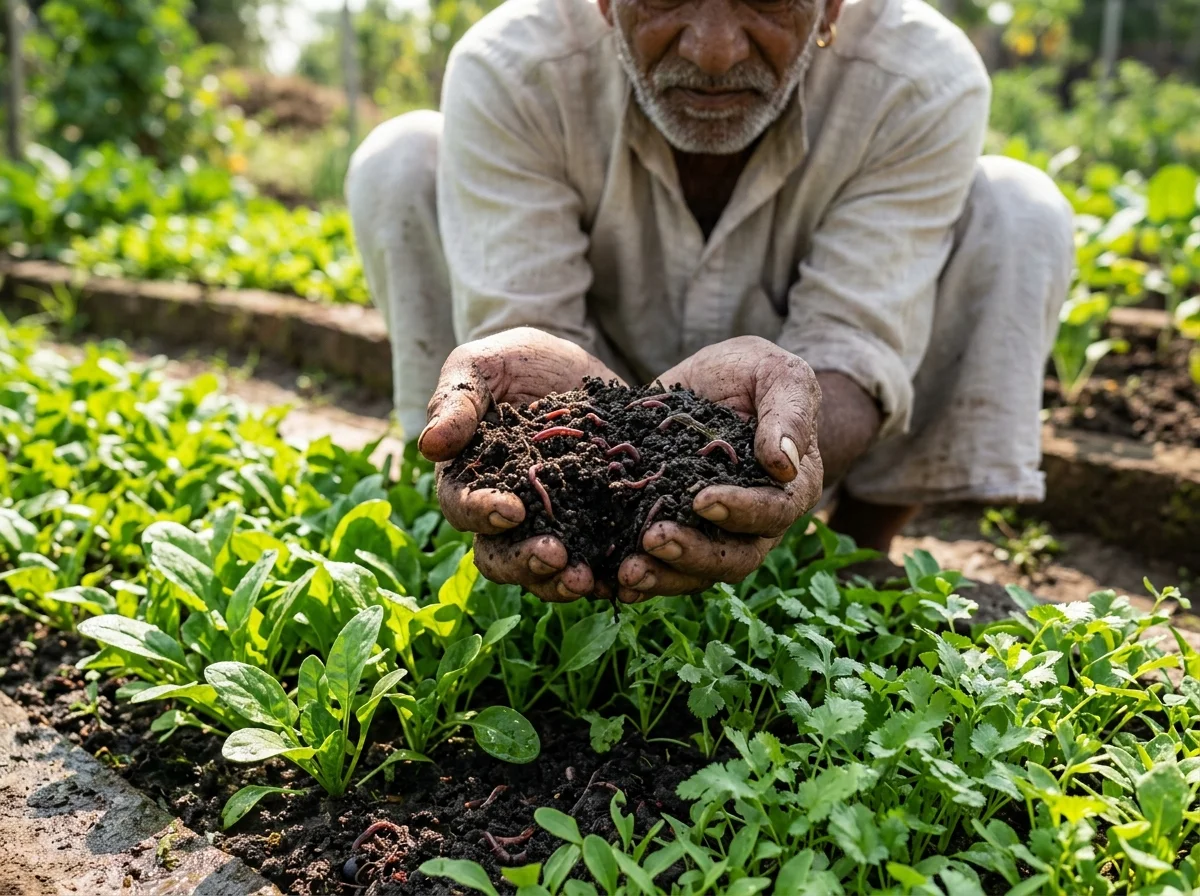
The Best Organic Fertilizers in India play an increasingly vital role in modern sustainable agriculture as farmers throughout the country seek to rebuild soil organic matter, restore microbial diversity, and reduce dependence on intensive synthetic chemical applications. In diverse agro-climatic zones—from the fertile alluvial plains of West Bengal, Punjab, and Uttar Pradesh to the black soils of Maharashtra and the coastal tracts of South India—maintaining biological soil health is essential for consistent crop productivity and resilience against environmental stresses.
Rather than relying solely on fast-acting chemical salts that can degrade soil structure and deplete organic carbon over time, organic fertilizers nourish the complete living soil system. They supply essential macro and secondary nutrients in slow-release forms, improve soil moisture retention, foster beneficial bacterial and mycorrhizal populations, and encourage deep, robust root penetration without making unsupported yield claims.
What Are Organic Fertilizers?
Organic fertilizers are naturally derived materials sourced from decomposed plant matter, animal manures, crop residues, agricultural by-products, and beneficial biological inoculants. Unlike synthetic mineral fertilizers that provide immediately soluble ions directly to the soil solution, organic fertilizers work through natural biological mineralisation. Beneficial soil microorganisms gradually break down the complex organic compounds, releasing plant-available nitrogen, phosphorus, potassium, and vital micronutrients in harmony with crop growth cycles.
Common Types of Organic Fertilizers in Indian Agriculture
Indian farmers have access to a rich spectrum of natural and processed organic nutrient sources, including:
- Farmyard Manure (FYM): Traditional decomposed mixture of cattle dung, urine, bedding straw, and feed residues providing comprehensive soil conditioning.
- Vermicompost: Nutrient-rich, biologically active castings produced by earthworms feeding on organic farm biomass.
- Compost & Leaf Mould: Aerobically decomposed organic plant residues rich in humic substances and stable organic carbon.
- Neem Cake & Oil Meals: Residual cakes from neem seed processing, providing slow-release organic nitrogen while naturally deterring subterranean soil nematodes.
- Oilseed Cakes: Mustard cake, castor cake, and groundnut cake prized for balanced N-P-K content and rapid microbial activation.
- Bio-based Nutrient Products & Soil Conditioners: Formulated organic manures and mineral soil conditioners like Fortis and Bhupushti Gold designed for targeted crop nutrition and soil correction.
Best Organic Fertilizers in India for Different Farming Needs
No single organic fertilizer is universally superior for every soil or crop. Different agricultural challenges require appropriate nutrient inputs suited to local soil texture, pH, existing organic carbon, and crop nutrient demand.
| Organic Fertilizer Type | Main Benefit | Suitable Use |
|---|---|---|
| Vermicompost | Adds organic matter and nutrients | Vegetables, field crops, horticulture |
| Farmyard manure | Improves soil structure and organic matter | Field and horticultural crops |
| Compost | Supports soil conditioning | General crop production |
| Neem cake | Provides organic nutrients and supports soil management | Field crops, vegetables, horticulture |
| Organic/bio-based nutrient products | Targeted crop nutrition | Depending on product and crop requirement |
How to Choose the Right Organic Fertilizer for Your Farm
Selecting an effective organic fertilizer strategy requires evaluating key agronomic factors rather than routine application:
- Crop Nutrient Requirements: High-feeding crops such as commercial vegetables and hybrid cereals have higher immediate nutrient demands than hardy pulses or millets.
- Soil Organic Carbon (SOC) Status: Soils with organic carbon below 0.5% require substantial bulk organic matter such as compost or farmyard manure before micro-nutrient uptake can be optimized.
- Soil Test Results: Regular soil testing reveals precise pH imbalances, phosphorus fixation, and specific micronutrient deficiencies that generic applications miss.
- Product Quality and Maturity: Well-composted, fully cured organic inputs prevent nitrogen tie-up and avoid introducing weed seeds or soil-borne pathogens.
- Crop Growth Stage: Basal application of bulky organic manure prepares the seedbed, while foliar biological extracts and targeted organic boosters support active flowering and fruit development.
How Organic Fertilizers Support Indian Agriculture
Applying the best organic fertilizers in India provides tangible, long-term agronomic benefits:
- Supporting Soil Organic Matter: Sustained additions of organic residues build soil humus, helping reverse soil degradation across intensively farmed regions.
- Improving Soil Structure and Porosity: Organic matter binds soil particles into stable aggregates, enhancing aeration, root penetration, and moisture infiltration.
- Enhancing Water Retention: Soils enriched with organic manure withstand dry spells significantly better due to higher water-holding capacity.
- Stimulating Beneficial Microbial Activity: Organic carbon provides the energy substrate needed by nitrogen-fixing bacteria, phosphate-solubilising organisms, and mycorrhizae.
- Facilitating Balanced Micronutrient Uptake: Natural chelation by humic and fulvic acids keeps zinc, iron, boron, and manganese available in the root zone.
Choosing Organic Fertilizers According to Crop and Soil
Organic Fertilizers for Rice (Paddy)
Paddy is cultivated under anaerobic, flooded conditions that uniquely influence nutrient dynamics. Integrating well-decomposed organic manure such as Bhupushti during initial puddling improves root anchorage, reduces nutrient leaching in sandy loams, and supplies steady organic nitrogen throughout the tillering and panicle initiation stages.
Organic Fertilizers for Vegetables
Vegetable crops such as tomatoes, potatoes, chillies, cabbage, and leafy greens require rapid, readily available nutrients and well-drained fertile soils. Combining vermicompost with bio-fertilizers and organic boosters ensures balanced vegetative growth, strong flowering, and superior market quality without chemical residues.
Organic Fertilizers for Horticultural Crops and Orchards
Perennial fruit trees—including mango, citrus, guava, banana, and litchi—depend on deep soil health and persistent nutrient reserves. Deep band placement of organic manure blended with neem cake and natural mineral conditioners supports root health, prolongs tree vigour, and promotes uniform fruit development year after year.
How to Use Organic Fertilizers Effectively
To maximize the benefits of organic fertilizers, farmers should follow proven field management practices:
- Follow soil-test recommendations rather than applying uniform quantities across dissimilar plots.
- Ensure organic manures are thoroughly decomposed and cured before incorporation to prevent root burn.
- Incorporate basal organic fertilizers into the top 15–20 cm of soil during primary land preparation for optimal root contact.
- Practice Integrated Nutrient Management (INM) by combining organic manures with bio-fertilizers and appropriate green manuring crops.
- Maintain adequate soil moisture to support active microbial decomposition and nutrient release.
Why Soil Testing Matters
Applying fertilizers without soil testing is like prescribing medicine without a diagnosis. A routine soil test determines soil pH, electrical conductivity (EC), organic carbon percentage, and available N, P, K, and micronutrient levels, enabling growers to select the exact organic amendments their fields genuinely require.
Why Choose Quality Organic Fertilizer Products?
The performance of any organic fertilization plan depends heavily on product purity, certified production standards, and consistent nutrient content. Low-grade, poorly processed manures can harbor weed seeds, excess moisture, or heavy metal contaminants.
Indochem Agrovet offers rigorously formulated, high-performance organic agriculture solutions engineered for Indian soil conditions:
- Fortis: Natural soil conditioner designed to restore soil structure, alleviate acidity, and deliver vital secondary nutrients (sulphur and magnesium) for superior nutrient availability.
- Bhupushti Gold / Bhupushti: Advanced organic manure formulation rich in stable organic carbon, humic substances, and balanced natural nutrients that revive biological fertility.
- Neem Baan: Premium neem-based formulation that provides organic nutrition while safeguarding root zones against harmful soil pests.
- Rootmor: Specialized biological root-growth promoter that stimulates extensive secondary and tertiary feeder roots for enhanced nutrient absorption.
Frequently Asked Questions
1. Which organic fertilizer is best for Indian crops?
There is no universal single "best" organic fertilizer for every situation. Vermicompost and farmyard manure are excellent for general soil conditioning and organic carbon replenishment, while specialized inputs like Fortis and Bhupushti provide targeted secondary nutrients and soil conditioning suited to specific soil and crop requirements.
2. Is vermicompost good for crop production?
Yes. Vermicompost contains balanced plant nutrients, beneficial microbial flora, enzymes, and plant growth hormones. It improves soil aeration, water-holding capacity, and seedling vigour across vegetables, field crops, and floriculture.
3. Can organic fertilizers be used with other fertilizers?
Yes. In Integrated Nutrient Management (INM) systems, organic fertilizers are frequently combined with bio-fertilizers and judicious conventional inputs. Organic manure improves fertilizer use efficiency by reducing nutrient leaching and volatilization.
4. How do I choose an organic fertilizer for my soil?
Review soil-test reports to assess your soil's pH, organic carbon status, and nutrient deficits. Choose fully decomposed organic manures, bio-fertilizers, or natural soil conditioners that directly target your crop's growth stage and soil constraints.
5. Are organic fertilizers suitable for all crops?
Organic fertilizers can be successfully utilized across virtually all agricultural and horticultural systems, including paddy, wheat, pulses, oilseeds, vegetables, fruits, spices, and plantation crops, provided dosage and timing match crop requirements.
Conclusion: Choosing the Right Nutrient Source for Your Farm
Adopting the Best Organic Fertilizers in India is a proven, forward-looking commitment to building enduring soil fertility, sustainable farming viability, and healthier harvests. When farmers combine high-quality organic fertilizers with regular soil testing, balanced crop nutrition, and expert guidance, both the soil ecosystem and crop productivity flourish.
Build Healthier Soil with Indochem Agrovet
Explore Indochem Agrovet's dedicated range of organic fertilizers, natural soil conditioners, and bio-nutrients formulated to maximize soil fertility and crop vitality.
Discover Fortis Soil Conditioner Explore Organic Manure Contact Us